


Discover

Discover India. East to West. North to South. City by City.

Every place has a story. Stories that sustained us then, sustain us now, and will carry us forward.

Discover the products, places and traditions that give India’s cities and regions their distinct identity.

Know the place. Discover what it makes.

  • From every corner of India
  • From the people who keep it alive
  • From traditions that evolve
  • From stories worth sharing

Chikankari Embroidery

Lucknow, Uttar Pradesh

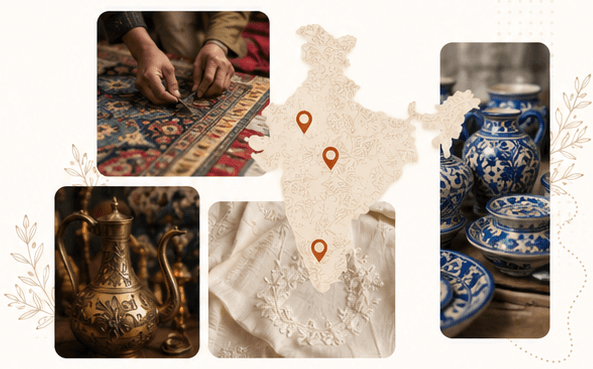
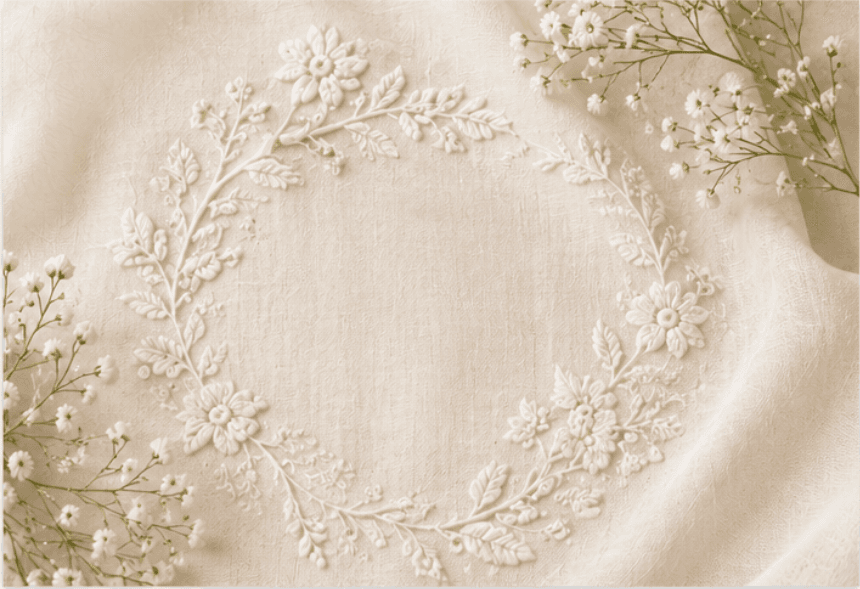
Chikankari is the whitework embroidery of Lucknow: a floral trellis of creepers, buds and paisleys printed in washable ink on fine cotton or sheer fabric, then embroidered — traditionally in untinted white thread — so the pattern reads as texture and shadow rather than colour. Its vocabulary of roughly thirty named stitches falls into three families: flat stitches such as tepchi and bakhiya that lie on or just under the cloth, embossed stitches such as murri and phanda that sit up as tiny grains and knots, and openwork such as jali, where threads of the ground are teased apart with the needle to leave a fine net without cutting the cloth. Worked on pale mulmul, chikan kurtas, saris, dupattas and angarkhas stay cool and near-weightless, and the same piece often passes through several specialists — one for outlining, another for knots, another for jali.

Zardozi Metal Thread Embroidery

Lucknow, Uttar Pradesh

Zardozi is India's principal metal-thread embroidery — raised, dense work in which gold- and silver-coloured wire, coiled purl (dabka, salma), spangles (sitara), beads and stones are couched and stitched onto fabric stretched drum-tight on a wooden frame. It is worked into bridal lehengas and sarees, sherwanis and achkans, saree and dupatta borders, potli bags, shoe uppers, caps, ceremonial umbrellas, and wall panels, canopies and furnishings. It ranges from flat couched line to heavily padded karchobi relief, and Lucknow's zardozi, often combined with chikankari, is GI-tagged.

Maheshwari Saree

Maheshwar, Madhya Pradesh

The Maheshwari saree, from the Narmada fort town of Maheshwar in Madhya Pradesh, is a light cotton, silk, or cotton-warp-and-silk-weft cloth with a soft matte sheen, a plain or checked body, small geometric butis, and a distinctive border that is reversible — woven so it can be worn with either side showing. The narrow pallu is typically striped, and the colour palette leans to soft, dusty tones with deeper borders.

Chanderi Fabric

Chanderi, Madhya Pradesh

Chanderi cloth, from the town of the same name in Ashoknagar district of Madhya Pradesh, is a light, semi-transparent fabric woven from fine cotton, pure silk, or a silk-warp and cotton-weft blend, with a characteristic glassy sheen. Chanderi sarees carry gold or coloured zari borders (nakshi) and small woven motifs — the Ashrafi coin, flowers, peacocks, geometric butis — scattered across the body. The translucency comes partly from using unbleached, non-degummed yarn and a very fine reed.

Jaipur Blue Pottery

Jaipur, Rajasthan

Jaipur blue pottery is a low-fired glazed ceramic whose body is made not from clay but from a dough of ground quartz, powdered glass, borax, gum and water. Pieces — plates, bowls, vases, jars, tiles, coasters, door knobs, soap dishes and animal figures — are painted with cobalt blue and copper turquoise on a white ground, sometimes with brown, green or yellow, and covered in a soft, glassy glaze. Because the body has no clay, it cannot be thrown on a wheel and is instead pressed into moulds or hand-shaped.

Warli Painting

Dahanu, Maharashtra

A tribal wall-painting tradition of the Warli Adivasi people of the Sahyadri foothills north of Mumbai, built almost entirely from the circle, the triangle and the line. White rice-paste figures dance, farm, hunt and marry across an earth-brown ground, ringed around the central 'chauk' of the mother goddess Palaghata.

Gond Painting

Patangarh, Madhya Pradesh

A contemporary painting tradition rooted in the Pardhan Gond community of central India, in which animals, trees and deities are built up from dense fields of dots, dashes and fine parallel lines. Each artist works in a signature 'signature pattern' — fish scales, seeds, commas — that fills every form with vibrating texture.

Kani Shawl Weaving

Srinagar, Jammu and Kashmir

The loom-woven Kashmir shawl, in which the pattern is built not by a shuttle but by dozens of small wooden bobbins ('kani'), each carrying one colour, worked by hand across a few threads at a time. A single line of the design may pass through hundreds of bobbin movements; a full shawl can take one to three years and is read from a coded pattern script.

Thatheras of Jandiala Guru

Jandiala Guru, Punjab

The hand-hammered brass, copper and kansa (bronze) utensil craft of the Thathera community of Jandiala Guru near Amritsar. Sheets and cast discs of metal are beaten over anvils by teams of craftsmen into degchis, gagars, thalis, bowls and the prized bell-metal dining ware, then scoured bright and often tinned inside.

Kundan-Meenakari Jewellery

Jaipur, Rajasthan

The traditional gold jewellery of Rajasthan, made by two complementary crafts on one piece: 'kundan' setting, in which gems are held not by claws but by slivers of pure refined gold pressed around them, and 'meenakari', vitreous enamel fired onto the gold, usually on the reverse so the piece is beautiful whether the stones or the enamel face outward.

Longpi (Nungbi) Black Pottery

Longpi (Nungbi), Manipur

The wheel-less black stoneware of the Tangkhul Naga villages of Nungbi in Manipur's Ukhrul district. Vessels are built by hand from a paste of crushed weathered rock and serpentine stone, shaped against a wooden mould and paddle, fired in an open bonfire, and rubbed while hot with a local leaf to a soft charcoal-grey sheen.

Adilabad Dokra Metalwork

Adilabad, Telangana

Adilabad dhokra is unglazed brass sculpture made by the Woj (Ojha) community of the old Adilabad district in northern Telangana. The pieces are ritual and everyday objects turned into art: Hindu and tribal deities, humped bulls, elephants, peacocks, tortoises, dancing figures, oil lamps, grain measures and neck ornaments. Every surface carries a fine ribbed texture left by the coils of wax thread used to build the model, and because each clay mould is broken open to release its casting, no two pieces are ever identical. The brass has a soft golden colour and is usually left with the marks of filing and the casting channels only lightly cleaned away, so the object still shows how it was made.

Agra Marble Inlay (Pietra Dura)

Agra, Uttar Pradesh

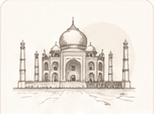
Agra marble inlay, known locally as parchin kari and in Europe as pietra dura, sets thin slivers of coloured semi-precious stone flush into a white marble ground to form flowers, curling vines, birds, arabesque borders and geometric medallions. It is worked into tabletops, trays, coasters, boxes, plates, lamp bases, chessboards, wall panels and architectural cladding. In the best work the joints between the stones and the marble are so fine that they cannot be felt with a fingertip, and the polished surface reads as a single continuous plane of colour and light. The craft's fame rests entirely on the monuments of Mughal Agra, above all the Taj Mahal, whose inlaid floral dados the modern workshops still copy motif for motif.

Ahmedabad Textile & Block Printing

Ahmedabad, Gujarat

Ahmedabad and its surrounding villages form one of the oldest cotton-printing and textile-trading centres in the world. Craftsmen print yardage, dupattas, sarees, bed covers, quilts and garments using hand-carved wooden blocks, working in two broad families of technique: mordant styles, in which a printed metallic salt fixes a dye that develops in a later bath, and resist styles, in which a paste, wax or mud is printed to keep dye away from parts of the cloth. Designs range from tiny buti sprigs and geometric jaals to the sprawling flowering trees and paisley butas that European buyers once ordered by the shipload. The city's Calico Museum of Textiles, one of the finest textile collections anywhere, grew directly out of this trade.

Aipan Art

Almora, Uttarakhand

The ritual floor and wall drawing of the Kumaon hills of Uttarakhand, made freehand in white rice paste on a red-ochre ground. Aipan marks thresholds, courtyards, shrines and ceremonial seats with grids of dots joined into lotuses, conches, footprints and geometric 'yantra' patterns, drawn by the women of the house for every festival and rite of passage.

Ajmer Embroidery & Leatherwork

Ajmer, Rajasthan

Around Ajmer and the neighbouring towns of central Rajasthan, cobbling and embroidery families make mojari and juti — flat, pointed, backless slip-on shoes — along with embroidered purses, belts, wallets, camel and horse trappings, and bound boxes. The uppers are decorated with silk-thread embroidery, tiny mirrors, gota ribbon, tilla wire and cowrie or bead trims, often in bright contrast to the natural tan of the vegetable-cured hide. Pilgrimage to Ajmer's great Sufi shrine gave the cobblers a steady, centuries-old market in travellers, and the shoe remains a fixture of Rajasthani wedding dress.

Ajrakh Block Printing

Bhuj, Gujarat

Ajrakh is a complex resist- and mordant-printed cloth made in Kutch, Gujarat, chiefly at the villages of Ajrakhpur and Dhamadka. Its deep blue, madder red, black and white patterns are built from geometric grids, eight-pointed stars, trefoils, cintamani dots and floral lattices drawn from Islamic ornament. Traditionally it was the everyday cloth of the Maldhari herding communities, worn as turbans, lungis and shoulder wraps and given at births, weddings and deaths. What sets it apart from most block prints is that it is printed on both faces of the cloth in exact register, so the design reads identically front and back and there is no wrong side. A full Ajrakh passes through sixteen to twenty separate printing, dyeing, washing and drying stages, all using plant and mineral colour.

Alappuzha Coir Craft

Alappuzha, Kerala

Alappuzha, long the capital of India's coir industry, turns the fibrous husk of the coconut into rope, matting, rugs, carpets, mattresses and geo-textiles. Products range from plain bristle and fibre door mats to jacquard-patterned corridor mattings, hand-tufted and hand-knotted pile carpets, and engineered coir netting used to hold soil on slopes and riverbanks. The town's grid of canals and its rows of tall spinning and warehouse sheds grew up entirely around the trade, and 'Alleppey' remains a recognised quality mark in the world floor-covering market.

Alwar Pottery & Paper Craft

Alwar, Rajasthan

Alwar in eastern Rajasthan is known for kagzi pottery — literally 'paper' pottery — a delicate grey-to-black unglazed earthenware whose walls are thrown and then scraped so thin that a finished vessel rings when tapped and glows where the light passes through the rim. Bowls, cups, surahis, incense holders and decorative pots are made this way. The town also had a long tradition of handmade paper produced by the Kagzi community, whose craft name the pottery took over as the paper trade declined.

Andro Hand-Built Pottery

Andro, Manipur

Andro, a Chakpa village east of Imphal in Manipur, makes cooking pots, water vessels, ritual pots, pipes and lamps entirely without a potter's wheel. The maker builds each vessel by hand and beats it into shape with a wooden paddle worked against a stone anvil held inside, then fires it in an open bonfire rather than a kiln, which leaves the surface mottled in red, brown and smoky black. The village also keeps a sacred perpetual fire and a cultural complex, and its potters have been documented as living carriers of a pre-wheel ceramic technology.

249+Craft TraditionsAcross India
30States & UTsRich in craft heritage
Country WideSkilled ArtisansKeeping traditions alive
Centuriesof HeritagePassed down generations

Every craft has a story. Every story begins with tradition.